
Approved Engine Course (AEC 2)
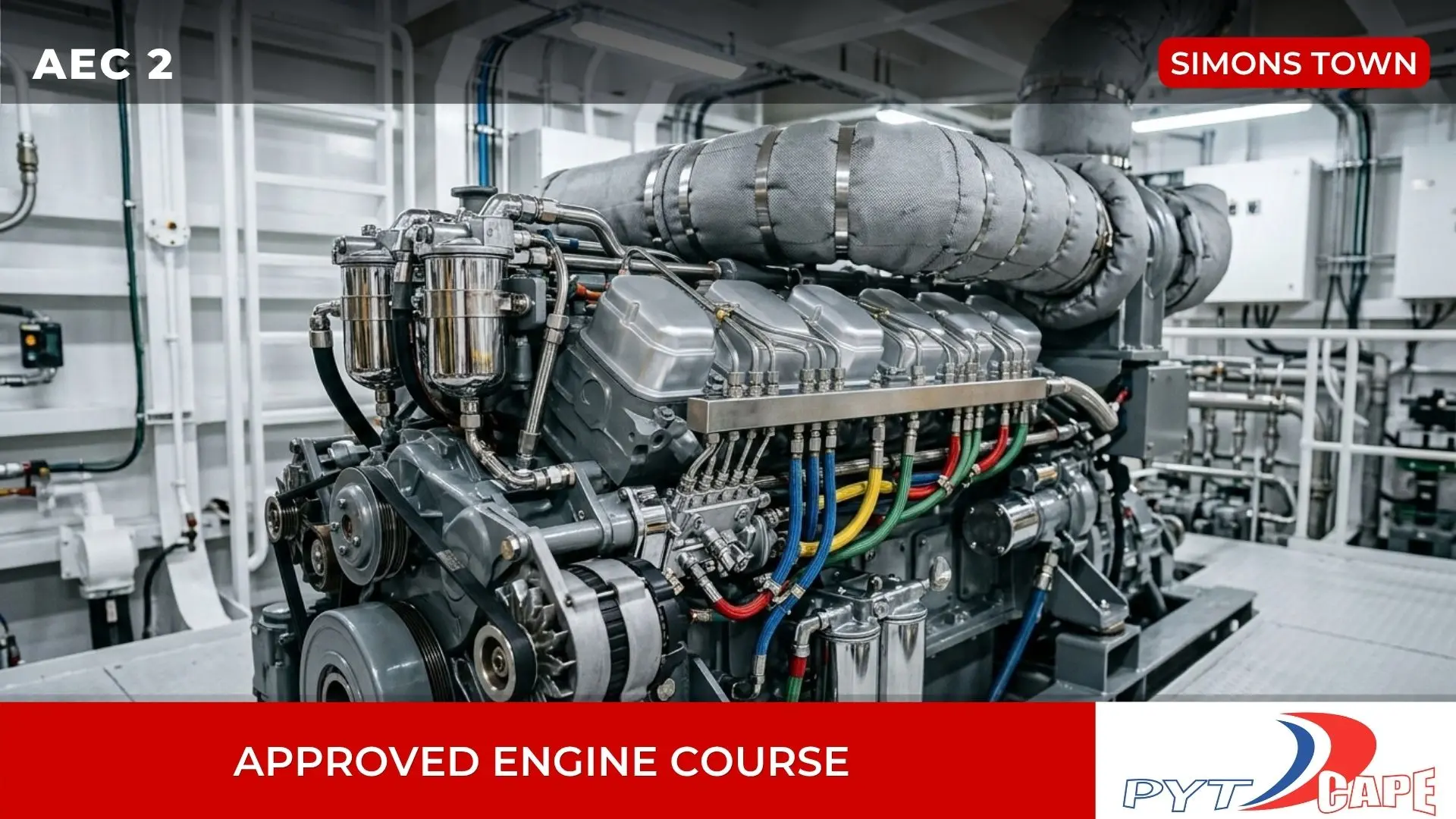
The step that takes you from understanding an engine to being responsible for one, and the second certificate the Small Vessel CoC route requires.
What this course covers
AEC 1 teaches you how an engine works. AEC 2 makes you the person responsible for keeping it working.
The course is built around the Certificate of Competency requirements for the Small Vessel category, which covers a wider range of craft than most people expect. Yachts, tugs, fishing vessels, workboats, standby vessels, seismic survey and oceanographic research ships, and government patrol vessels. Anything under 3,000 GT with less than 9,000 kW of power, operating with no area restriction.
That breadth matters. An AEC 2 holder is not locked into yachting. The same certificate opens doors in commercial workboat operations and research vessels, which is worth knowing if the superyacht season ever looks thin.
The focus shifts from theory to practice. Where AEC 1 explains systems, AEC 2 covers servicing them on a routine schedule and, more usefully, recognising a developing fault before it becomes a breakdown at sea. On a small vessel there is no second engineer and no workshop. The person aboard fixes it or the vessel does not move.
The pass mark reflects that. Continuous practical assessment through the week, plus a written exam requiring 60% rather than a simple pass.
Course content
The week builds on AEC 1 and moves the emphasis from how systems work to maintaining and diagnosing them.
Routine servicing schedules
Planned maintenance on main engines and auxiliary machinery. What gets checked daily, weekly and by running hours, and how to keep records that satisfy a surveyor.
Fault diagnosis
Working back from a symptom to a cause. Recognising the early signs of a developing problem in temperature, pressure, noise, vibration and exhaust, and acting on them before they become failures.
Auxiliary machinery
Generators, pumps, compressors and the supporting systems aboard a small vessel. Operation, servicing and fault-finding.
Electrical systems
Batteries, charging, distribution and basic fault-finding. The system that causes the most call-outs and the one most crew are least confident with.
Steering and control systems
Hydraulic steering, controls, and the systems that link the bridge to the machinery.
Practical workshop skills
Hand tools, measurement, and the repairs that can reasonably be made at sea with what is aboard.
Operating within the Small Vessel category
The responsibilities that come with the CoC. Record-keeping, reporting, safe isolation and working practices in machinery spaces.
Assessment. Continuous practical assessment throughout, with a one-hour written exam on the final day. A minimum of 60% is required to pass.
Where this certificate takes you
AEC 1 and AEC 2 together are what the MCA recognises as the foundation of the engineering route. Sea service only counts towards higher qualifications once both are held, so engineering progression genuinely begins at the point you complete this course, not before.
The demand picture continues to favour engineers. Deck officers are plentiful, qualified small-vessel engineers are not, and that imbalance exists because the engineering route was perceived as harder work than Yachtmaster. Anyone who takes it seriously arrives in a thinner field.
For deck crew, the combination is worth considering even without engineering ambitions. A captain of a smaller yacht who also holds AEC 1 and AEC 2 is meaningfully more employable than one who does not, because on boats that size there is often nobody else aboard who can open an engine hatch with confidence.
Beyond yachting, the Small Vessel category covers workboats, tugs, fishing vessels, survey ships and government patrol craft, so the certificate travels well outside the leisure industry.
