
Efficient Deckhand Course (EDH)
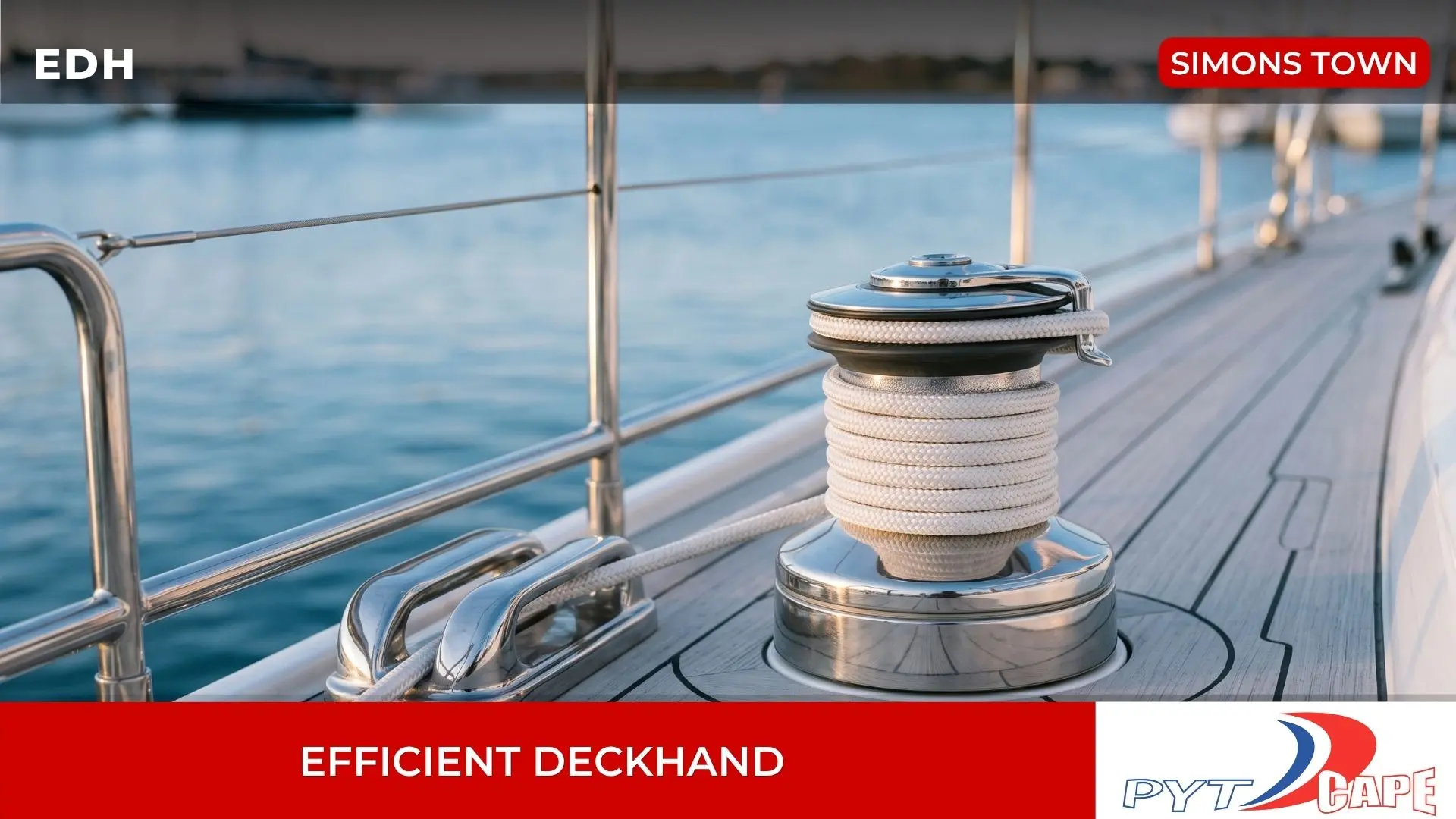
Five days at Simons Town, and the certificate you need to be holding eighteen months before your OOW ticket can be issued.
Book the efficient deckhand course earlier than you think
If you are working towards the MCA Yacht Officer of the Watch 3000gt Certificate of Competency, there is a detail in the regulations that catches people out badly.
The EDH certificate must have been held for eighteen months before your CoC can be issued.
Not completed eighteen months before you apply. Held. The clock starts the day the certificate is issued and runs for a year and a half regardless of what else you finish in the meantime.
You can sit the OOW oral examination before then. You can complete every module, log every day of sea service and pass every paper. If your EDH certificate is fourteen months old, the CoC does not issue and you wait four more months.
Which makes EDH one of the few certificates where the right time to do it is as early as you are eligible, not when you get around to it. Plenty of people discover this rule at the point it costs them a season.
What the efficient deckhand course covers
EDH is a practical seamanship qualification. Five days of theory and hands-on training in the skills a competent deckhand is expected to demonstrate, assessed by written examination and practical demonstration rather than attendance alone.
The important thing to understand about it is what it is not. Despite being a requirement for a yachting CoC, this is not a yachting course. The Knowledge, Understanding and Proficiencies are set to Merchant Navy Training Board standards and apply to all vessel types.
That works in your favour. The certificate does not confine you to the leisure sector. The same qualification is recognised across commercial shipping, workboats and tugs, and the training reflects vessels considerably larger than most yachts.
It also means the standard is higher than a yacht-specific equivalent would set. Candidates who expected a gentler week generally find it isn't one.
Full requirements are set out in MCA MSN 1862.
Efficient Deckhand Course Content
Five days combining classroom theory with practical work, assessed throughout.
Ropework and rigging
Knots, bends and hitches, splicing wire and rope, whipping and seizing. Selecting the right line for a job and recognising when one should be condemned. Assessed practically, and the section people underestimate.
Mooring and anchoring
Making fast, handling heavy lines, working with springs, and the anchoring procedures used on vessels well beyond yacht scale. Heaving lines, towing and warping.
Deck equipment and maintenance
Winches, windlasses, derricks and lifting gear. Safe operation, routine maintenance, and the inspection standards applied to deck equipment and lifting appliances.
Steering and helm orders
Standard helm orders, responding correctly and repeating back, steering by compass, and the handover procedure between helmsmen.
Watch keeping and lookout
The duties of a lookout, reporting standards, bridge communication and what the officer of the watch actually needs from you. The bridge discipline that separates a rating from an able seafarer.
Safe working practices
Working aloft and over the side, enclosed space entry, permit-to-work systems, personal protective equipment, and the deck hazards that account for most shipboard injuries.
Emergency procedures
Muster and abandon-ship, fire and man-overboard response, and the deck crew's role in each.
How the certificate is issued. Four criteria, all of which must be met: full attendance for the five days, evidence gathered during the course, passing the written examinations, and demonstration of the practical skills.
Eligibility and where this certificate takes you
Eligibility is specific, and worth checking before you book.
You must be at least 17.
You must hold at least one of the following:
- An MCA-accepted Yachtmaster Offshore or Master of Yachts 200t Limited
- A Yacht Rating Certificate together with a steering certificate
- A Navigational Watch Rating Certificate
- A Boat Master Licence, Tier 1 or Tier 2
- A Tug Rating Certificate together with a steering certificate
And you must have completed at least six months of seagoing service on vessels over 15 metres.
For most people coming through the yachting route, the entry ticket is a Yacht Rating Certificate plus a steering certificate. If you do not hold it, that is the place to start, and it is the reason the Yacht Rating course exists on this site.
From EDH, the route runs into the OOW modules, then Chief Mate, then Master. EDH sits alongside them rather than in sequence, which is exactly why the eighteen-month rule bites: you can complete OOW and still be waiting on a certificate you could have taken two years earlier.
