
Approved Engine Course (AEC 1)
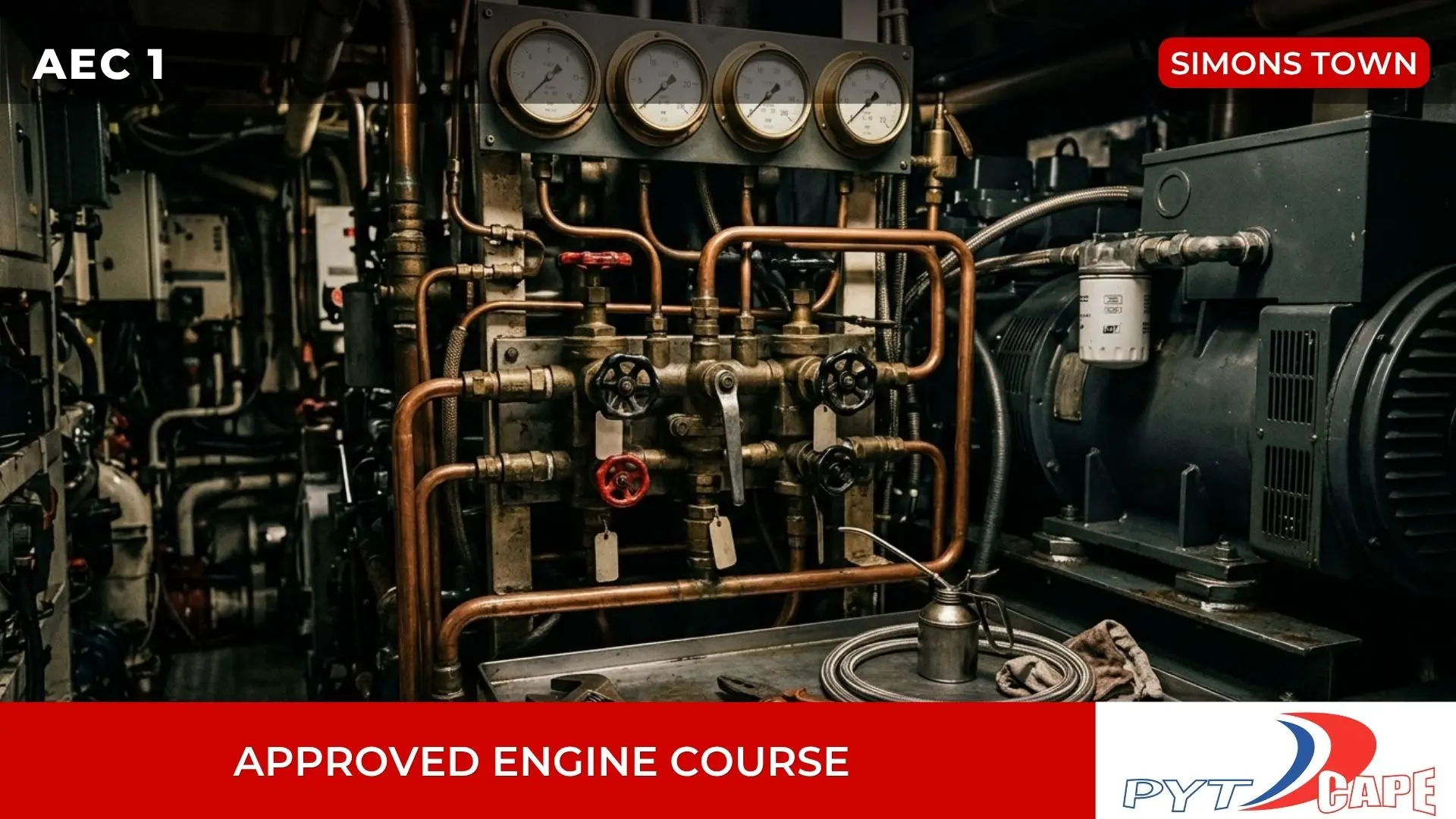
The first rung on the MCA engineering ladder, and the certificate without which none of your sea time counts towards the next one.
What the Approved Engine Course 1 covers
Yacht engineering has a supply problem. Deck officers are plentiful, qualified engineers are not, and the reason is that the MCA's engineering route has always looked more demanding than the deck route. Plenty of people who would have made good engineers went and did Yachtmaster instead.
That gap is an opportunity if you are willing to start here.
AEC 1 is the entry point, and it is deliberately accessible. You do not need engineering experience, an apprenticeship or a technical background. It is designed for people with the bare minimum of exposure to machinery, and for those with non-maritime technical training who need a route into the industry-specific qualifications.
There is one thing about AEC 1 worth understanding before anything else. Qualifying sea service for every higher engineering qualification is only recognised if you already hold this certificate. Time served without it does not count retroactively. Engineering progression does not begin until AEC 1 is in hand, which makes the timing of this course more important than most.
It also has value for people who never intend to be engineers. Captains of smaller yachts, where there is no dedicated engineer aboard, are considerably more employable with basic engineering certification alongside their deck tickets. On a 24-metre boat, the person who can diagnose a fuel problem at three in the morning is the person who gets hired.
Only MCA-approved providers can deliver this training.
Approved Engine Course 1 Content
The syllabus covers diesel engines and the systems around them. Practical work runs throughout rather than being saved for the end.
Compression ignition engines
General principles of how a diesel engine works, and why it works differently from a petrol engine. The foundation for everything else in the week.
Cycle of operation and construction
The operating cycle in detail, and the physical construction of the engine. What each component does and how it relates to the ones around it.
Fuel systems
Fuel handling from tank to injector. Filtration, water separation, bleeding a system, and the fuel problems that account for a large share of engine failures at sea.
The role of air in combustion
Air intake, turbocharging, and what happens to combustion when the air supply is restricted. Why a blocked filter shows up as a power problem.
Cooling, lubrication and electrical systems
Raw water and freshwater cooling circuits, heat exchangers, oil systems and pressure, and the electrical systems that support the engine. Routine checks and the early warnings of a developing fault.
Power transmission
Getting power from the engine to the propeller. Gearboxes, shafts, couplings and the alignment issues that cause vibration and wear.
Hull fittings
Seacocks, skin fittings, stern glands and the through-hull equipment an engineer is responsible for. The fittings most likely to sink a boat if neglected.
Pollution legislation
MARPOL and the regulations governing oil, fuel and waste discharge. What is permitted, what is not, and the consequences of getting it wrong.
Code of Safe Working Practices
Safe working in machinery spaces. Isolation procedures, hot work, confined spaces, and personal protective equipment.
Bottled LPG installations
Gas systems aboard, installation requirements, leak detection and safe handling. A small part of the syllabus with a disproportionate consequence if ignored.
Assessment. Practical ability is assessed continuously through the week, with a one-hour written examination on the final day.
Where the Approved Engine Course 1 certificate takes you
AEC 1 is the gateway to the MCA engineering route. Everything above it, including AEC 2 and the qualifications beyond, depends on holding it first.
The demand position is genuinely favourable. Properly qualified yacht engineers are in short supply while deck officers are not, which is unusual in an industry where most entry routes are crowded.
Two things are worth knowing before you book:
You need the STCW modules. Basic Sea Survival, Fire Fighting, Elementary First Aid and PSSR are required before the certificate can be issued. If you do not hold them, do the STCW course first.
You must be 18. No exceptions on this one.
The natural next step is AEC 2, which builds directly on this syllabus and is also run at Simons Town over five days.
Upcoming AEC 1 Courses
View More Courses
Events
Calendar of Events
|
Monday
|
Tuesday
|
Wednesday
|
Thursday
|
Friday
|
Saturday
|
Sunday
|
|---|---|---|---|---|---|---|
|
0 events,
|
0 events,
|
0 events,
|
0 events,
|
0 events,
|
0 events,
|
0 events,
|
|
0 events,
|
0 events,
|
0 events,
|
0 events,
|
0 events,
|
0 events,
|
0 events,
|
|
0 events,
|
0 events,
|
0 events,
|
0 events,
|
0 events,
|
0 events,
|
0 events,
|
|
0 events,
|
0 events,
|
0 events,
|
0 events,
|
0 events,
|
0 events,
|
0 events,
|
|
0 events,
|
0 events,
|
0 events,
|
0 events,
|
0 events,
|
0 events,
|
0 events,
|
